



Ideal L1 Fault Code: Overheat Lockout, Poor Flow and Safe Repair Advice
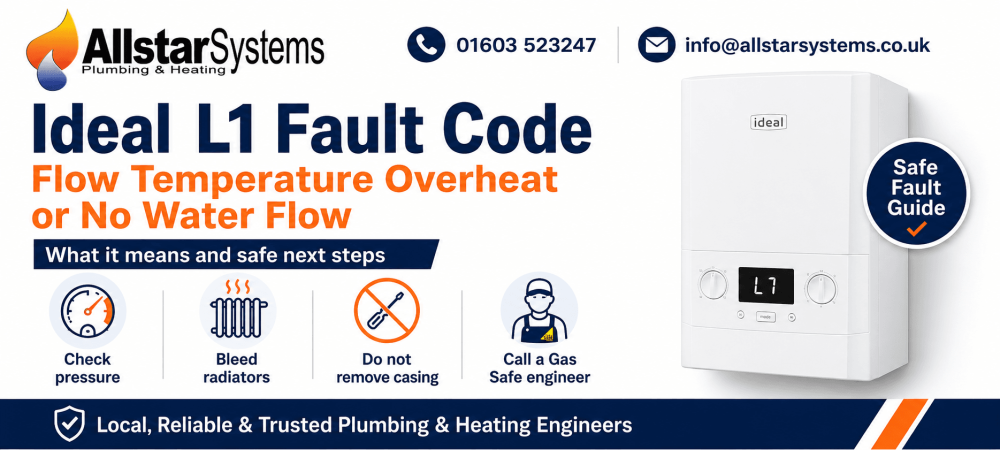
An Ideal L1 fault code usually means the boiler has detected an overheat or poor flow condition. In simple terms, warmth is not leaving the appliance quickly enough.
When this happens, the boiler often locks out to protect its parts. As a result, your home may lose heating, hot water, or both.
Common reasons include low pressure, shut radiator valves, trapped air, dirty system water, pump trouble, a restricted heat exchanger, or a faulty sensor.
What Does Ideal L1 Mean?
Ideal L1 normally points to flow temperature overheat or no water movement.
The boiler warms water and sends it around your home. If that movement slows down, the temperature rises too fast.
The appliance then shuts down as a safety step. This does not always mean the boiler has failed. Often, the wider heating circuit needs attention.
Common Signs of an Ideal L1 Fault
You may see L1 on the display. Your radiators may stay cold or warm unevenly.
You may also lose hot water. In addition, the boiler might start, stop, and lock out again.
Gurgling, rushing, or kettling noises may also appear. These sounds often point towards air, debris, or poor movement through the circuit.
Common Causes of Ideal L1
Several issues may trigger this warning. Most relate to pressure, movement, or temperature control.
Low pressure
Many Ideal systems sit around 1 to 1.5 bar when cold. However, always follow your own manual.
If the gauge sits too low, water may not move properly. The appliance then overheats more easily.
Closed radiator valves
If too many valves are shut, warm water has nowhere to go. This makes the appliance reach a high temperature too quickly.
Make sure enough valves remain open before using the reset button.
Trapped air
Air pockets stop normal movement through the circuit. This often leaves radiators cold at the top or patchy across the surface.
Bleeding radiators may help. However, always recheck the gauge afterwards, as pressure often drops.
Dirty system water
Sludge, scale, or debris can slow movement through pipework. Over time, this also affects pumps, valves, and heat exchangers.
If dirty water has caused poor performance, a system clean or power flush may be worth discussing.
Pump problem
The pump moves warmed water around the property. If it sticks, weakens, or fails, the appliance overheats quickly.
Pump faults need a qualified engineer.
Restricted heat exchanger
A blocked heat exchanger limits transfer and flow. You may also hear kettling sounds during operation.
This part should be inspected before anyone recommends replacement.
Faulty temperature sensor
A poor sensor reading may tell the boiler it is overheating when it is not.
An engineer can test the sensor and wiring safely.
Bypass fault
Some systems use a bypass route to keep movement going when valves close. If this route becomes blocked or badly set, flow may suffer.
This needs professional testing.
Safe Checks You Can Try First
You can complete a few basic checks without opening the case.
First, check the gauge when the system is cold. If it sits outside the range in your manual, follow the manufacturer’s guidance.
Next, make sure enough radiator valves are open. Do not run the appliance with all valves closed.
Then, feel the radiators for cold patches. If you bleed them, check the gauge again afterwards.
After that, try one reset if your Ideal manual allows it. If the warning clears and heating returns, monitor the appliance.
However, if L1 comes back, stop resetting it. Repeated resets will not fix poor movement, pump trouble, blocked parts, or sensor faults.
Important safety note: never remove the boiler casing. Do not touch gas parts, sealed components, wiring, pumps, sensors, or internal valves yourself.
What to Avoid
Do not keep pressing reset. Also, do not ignore odd noises, repeated lockouts, or cold radiators.
Do not replace parts based on guesswork. Overheat warnings need proper diagnosis if they return.
Can You Fix Ideal L1 Yourself?
You can check the gauge, open radiator valves, bleed radiators, and try one approved reset.
Beyond that, call a Gas Safe registered engineer. Pump, heat exchanger, bypass, sensor, and internal flow checks need safe access and the right tools.
Therefore, DIY repair is not suitable if the warning returns.
How an Engineer May Repair It
A heating engineer will work through the likely causes in order. They may inspect pressure, pump operation, radiator performance, bypass setup, sensor readings, and water quality.
They may also test the heat exchanger, valves, trapped air, pipe restrictions, and related wiring.
Once they find the cause, they can repair the fault, clean the system, replace a failed part, or advise on power flushing where needed.
Afterwards, they should reset the boiler and confirm safe operation.
Can L1 Damage the Boiler?
L1 acts as a safeguard. However, repeated overheating can still cause extra wear if the cause remains.
Because of this, repeat lockouts need early attention. Quick diagnosis helps prevent a minor issue becoming a larger repair.
How to Reduce Future L1 Problems
Annual servicing helps keep the boiler safe and efficient. During a service, an engineer can inspect key parts, test operation, and spot early concerns.
Good system water quality also matters. A magnetic filter, inhibitor, and proper cleaning can reduce sludge-related issues.
In addition, act early if radiators warm slowly, stay cold in places, or make noise.
Why Choose Allstar Systems?
Allstar Systems provides boiler and heating services across Norwich and Norfolk.
Our engineers work with gas, oil, LPG, and electric heating systems. We inspect the appliance, radiators, pipework, pump, heat exchanger, and wider circulation issue before recommending repairs.
We provide clear advice, safe workmanship, and practical solutions for your home.
Final Advice on Ideal L1
Ideal L1 usually means the appliance has detected overheating or poor water movement.
Start with safe checks. Check the gauge, open radiator valves, bleed cold radiators if needed, and try one reset if your manual allows it.
If the warning returns, contact a Gas Safe engineer. The cause may involve pressure loss, trapped air, sludge, pump failure, a restricted heat exchanger, a sensor issue, or poor bypass setup.
FAQS About Ideal boiler L1 fault code
What does L1 mean on an Ideal boiler?
L1 on an Ideal boiler means flow temperature overheat or no water flow. The boiler has detected overheating, poor circulation, or restricted water movement.
Can I reset an Ideal boiler with an L1 fault?
Yes, you can try one reset after basic checks. However, if the L1 fault returns, stop resetting the boiler and contact a Gas Safe registered engineer.
Can low pressure cause an Ideal L1 fault code?
Yes, low pressure can reduce water circulation. Therefore, it can contribute to overheating or no water flow faults.
Why does my Ideal boiler keep showing L1?
A repeated Ideal L1 fault can suggest low pressure, trapped air, closed valves, sludge, a faulty pump, a blocked heat exchanger, or a sensor issue.
Is an Ideal L1 boiler fault dangerous?
The lockout helps protect the boiler. However, repeated overheating needs professional attention because the underlying fault may damage parts.
Can I fix an Ideal L1 fault myself?
You can check pressure, open radiator valves, bleed radiators, and reset the boiler once. However, internal testing and repairs need a qualified engineer.
How much does it cost to fix an Ideal L1 fault?
The cost depends on the cause. A pressure or valve issue may be simple, while pump, sensor, or heat exchanger faults may cost more.
How can I stop my boiler overheating again?
Book annual servicing, keep pressure correct, maintain clean system water, and deal with radiator cold spots quickly.