




Bosch GB162 Boilers for Larger Heating Projects
Choosing heating plant for a larger building takes careful thought. The right choice must suit the heat demand, fuel supply, flue route, controls, access and future maintenance needs.
The Bosch GB162, often known in the UK as the Worcester Bosch GB162, is a wall-mounted condensing range. It can suit some larger homes, managed buildings and light commercial sites.
However, it should not be selected by guesswork. A proper survey should come first. This helps confirm whether the GB162 range, a cascade arrangement, or another solution would offer better long-term value.
What Is the Bosch GB162 Range?
The GB162 is a wall-hung condensing boiler range. It uses gas and provides heat for larger central heating systems. It may also support domestic hot water when the wider setup includes suitable cylinders or controls.
The current GB162 V2 models offer outputs from 50kW to 100kW. Older versions may differ, so model details should always be checked before planning work.
Available GB162 V2 outputs include:
- 50kW
- 65kW
- 80kW
- 100kW
These options can suit buildings with higher demand than a standard domestic setup. Even so, output must be calculated, not assumed.
Why Specification Matters
A larger building often has varied heating needs. Some areas may run all day. Others may only need warmth at certain times.
Before choosing new plant, an engineer should review:
- building heat loss
- existing output
- hot water demand
- plant room size
- gas supply
- flue route
- controls
- pump arrangement
- water quality
- expansion provision
- maintenance access
- future use
This early work matters. An undersized unit may struggle in winter. An oversized one may cycle too often, which can reduce efficiency.
What Is a GB162 Cascade Setup?
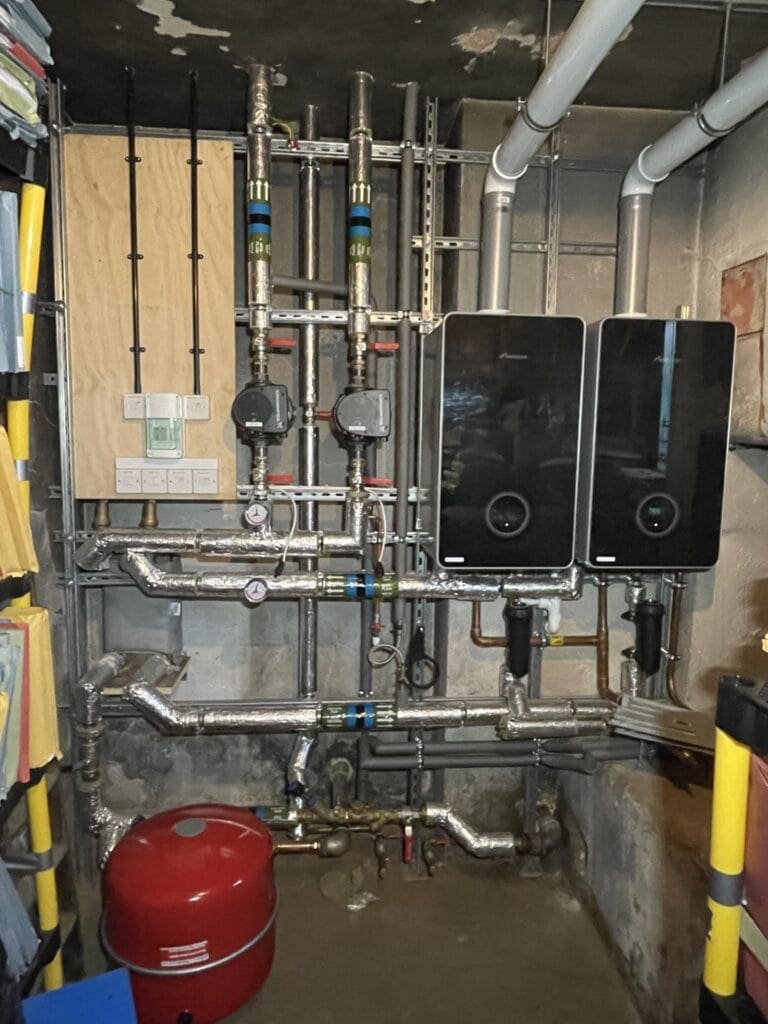
A cascade setup links two or more units so they work together as one controlled system.
Instead of one large appliance handling every demand, several smaller units share the load. During light demand, fewer units run. During busier periods, more join in.
This type of design can support:
- flexible output
- better load matching
- improved resilience
- easier service planning
- part-load efficiency
- future expansion
- neater plant-room design
Older Worcester Bosch information has referred to GB162 cascade layouts with up to eight units and a total output of 800kW.
However, cascade work needs careful design. Hydraulic separation, headers, pumps, controls, flues, gas supply and condensate drainage all need proper planning.
Why Wall-Mounted Plant Can Help
Wall-mounted heating plant can save floor space. This may help in tight plant rooms, refurbishments and buildings where a floor-standing unit is difficult to fit.
A neat wall-hung layout can also improve access when the room is designed well.
However, compact does not mean simple. Engineers still need safe working space, proper clearances, good lighting, sensible pipe routes and clear access for future servicing.
A tidy installation only works well if it remains easy to maintain.
Where the GB162 May Suit
The GB162 range may suit buildings with demand above a typical home setup.
Possible examples include:
- large homes
- residential blocks
- schools
- offices
- retail units
- care settings
- community buildings
- light commercial premises
- plant rooms with limited floor space
- sites needing linked units
Suitability depends on the building. Two similar-sized properties can have very different heat loss, controls and hot water needs.
Because of this, each project needs its own assessment.
Larger Homes and Residential Sites
Some homes need more heat than a standard domestic boiler could provide.
This may apply where a property has high ceilings, several zones, extensions, outbuildings, large radiators or underfloor heating.
Even then, bigger is not always better. The engineer should check heat loss, pipework, pressure, controls, cylinder demand, fuel supply and future plans.
In some cases, a domestic model may still suit the property better than a light commercial option.
Managed and Commercial Buildings
Schools, offices, retail units and managed buildings often need heat across many zones.
A GB162 setup may suit some of these sites. However, it will not suit every project.
The final choice may depend on plant-room access, flue layout, fuel supply, controls, water quality and service needs.
Sometimes, another wall-mounted range or a floor-standing commercial boiler may offer a better fit.
Gas Supply and Flue Planning
Fuel supply and flue design are critical.
A model may look suitable on paper, yet the project can fail if the gas supply is too small or the flue route is impractical.
Before installation, an engineer should check:
- meter capacity
- pipe sizing
- flue route
- air requirements
- condensate drainage
- ventilation
- clearances
- manufacturer instructions
- commercial standards
- service access
These checks reduce the risk of delays, poor performance and non-compliant installation.
Controls and Cascade Management
Controls shape how well the heating system works.
A building may need time schedules, zoning, weather compensation, hot water priority, staged firing, fault monitoring or BMS integration.
In a cascade layout, controls must manage each unit in the correct order. This helps match output to demand and avoids unnecessary running.
Good control design can improve comfort and reduce waste. Poor settings can make even a good installation perform badly.
Water Quality and System Protection
Water quality can make or break a heating upgrade.
Older systems may contain sludge, scale, rust or dirty water. If these remain, new equipment may perform poorly or suffer damage.
Before fitting new plant, an engineer may recommend:
- water testing
- system cleaning
- dirt separation
- magnetic filters
- inhibitor treatment
- pump checks
- strainer checks
- balancing
- commercial power flushing
This protects the new installation and supports better long-term performance.
Servicing Access and Maintenance
Servicing should never be an afterthought.
Engineers need safe access to the front, sides where required, flue, pumps, valves, controls, condensate route and isolation points.
The plant room should also have enough working space and lighting.
Poor access can make routine maintenance slower, harder and more costly. It may also affect future repairs or replacement work.
Commercial Boiler Servicing
Larger heating equipment needs regular servicing by suitably qualified engineers.
A service visit include safety checks, combustion checks, flue checks, leak checks, control checks, wear inspection and record keeping.
The right schedule depends on the appliance, manufacturer guidance and how the building is used.
Good records help with safety management, warranty terms and future planning.
Warranty and Manufacturer Rules
Warranty terms can change over time. Therefore, current terms should be checked before purchase.
Cover could depend on:
- correct design
- suitable installation
- proper commissioning
- water quality
- compatible controls
- regular servicing
- genuine parts
- manufacturer instructions
- accurate records
Do not rely only on old brochures or outdated online details. Always confirm the latest warranty position before work begins.
Temporary Heating During Replacement
Commercial replacement work can involve downtime.
For schools, care settings, offices, managed buildings and hospitality sites, loss of heat or hot water can cause serious disruption.
Temporary heating may help during planned replacement, plant-room refurbishment, emergency failure, upgrade work or seasonal pressure.
This should be discussed early, not after the site loses heat.
When Another Boiler May Be Better
The Bosch GB162 range will not suit every project.
Another option may be better where the building needs a different output range, floor-standing plant, a different flue route, another hydraulic design or a separate hot water strategy.
Access limits, fuel supply and future expansion plans may also change the decision.
Good design compares options before any final choice.
Questions Before Choosing GB162
Before selecting a Bosch GB162 boiler, ask:
- What is the building’s heat load?
- Is the current plant too large or too small?
- Would a cascade setup suit demand?
- Is the plant room suitable?
- Can the gas supply support the load?
- Is the flue route practical?
- Are controls suitable for the building?
- Does the system need cleaning first?
- Is the water quality acceptable?
- Can engineers service it safely?
- What warranty terms apply now?
- Will downtime cause problems?
- Is temporary heat needed?
- Would another model work better?
These questions help reduce mistakes before the project starts.
Need Commercial Boiler Advice?
If you manage a larger property, get advice before choosing a replacement boiler.
A qualified engineer can review the plant room, fuel supply, flue route, water quality, controls, access and heat demand.
This helps confirm whether the Bosch GB162 range suits the building, or whether another commercial heating option would be more suitable.
FAQs About Bosch GB162 Boilers
What is a Bosch GB162 boiler?
A Bosch GB162 is a wall-mounted gas-fired condensing boiler range used in larger residential, managed and light commercial heating systems.
Is Worcester Bosch GB162 the same as Bosch GB162?
In the UK, the range is commonly associated with Worcester Bosch. Bosch and Worcester Bosch branding can vary by market and literature.
What outputs are available for the GB162?
Current Worcester Bosch GB162 V2 literature covers 50kW to 100kW models. Always check current model data before specification.
Can GB162 boilers be installed in cascade?
Yes. Older Worcester Bosch GB162 literature describes cascade systems with up to 8 boilers and total capacity of up to 800kW.
What is a cascade boiler system?
A cascade system links multiple boilers so they work together. Controls can bring boilers on or off depending on the building’s heating demand.
Is the GB162 suitable for commercial buildings?
It may suit some light commercial and managed buildings. However, suitability depends on heat load, plant-room layout, gas supply, flue route, controls and access.
Can a GB162 boiler be used in a large home?
Sometimes. Larger homes with higher heating demand may suit this type of boiler, but a heat-loss assessment should confirm this.
Why does water quality matter with GB162 boilers?
Poor water quality, sludge and corrosion can affect performance, reliability and efficiency. System condition should be checked before replacement.
Who should install a GB162 boiler?
A suitably qualified heating engineer should install, commission and service the boiler in line with manufacturer instructions and relevant regulations.
Should I check warranty terms before choosing a GB162?
Yes. Warranty terms can change and may depend on correct installation, commissioning, servicing and system water quality.