




Ariston Error Code 304: Causes, Fixes and Safe Checks
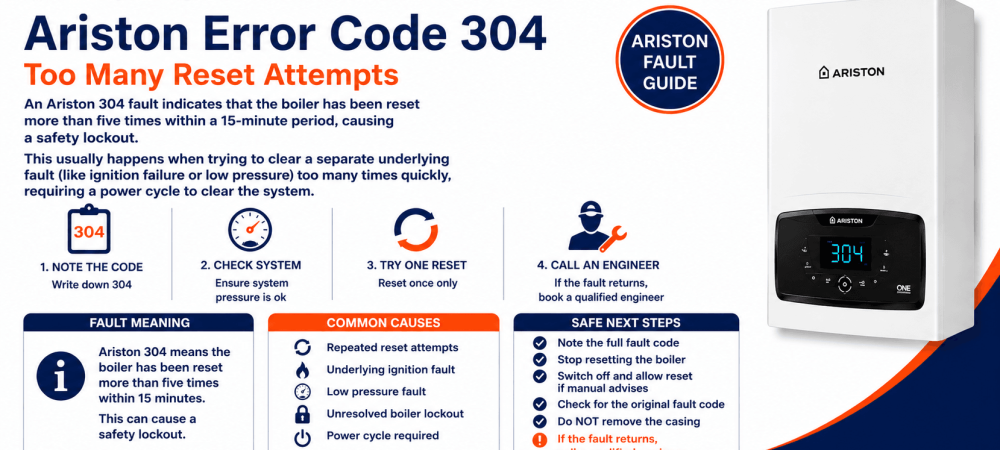
An Ariston boiler showing error code 304 has usually reached its safety limit for restarts. In simple terms, the appliance has been restarted too many times within a short period.
Ariston fault tables explain that 304 relates to too many restart attempts in 15 minutes. Therefore, this message often follows another problem. It is not usually the main cause.
For example, the heating system may lock out because of ignition trouble, low pressure, poor circulation, or another issue. If someone keeps pressing the restart button without fixing that first problem, 304 may then appear.
So, this message acts more like a lockout notice. It tells you the heating unit needs time, a power cycle, and proper diagnosis.
What does Ariston error code 304 mean?
This display message means the unit has had more than five restart attempts within 15 minutes. After this limit, it may stop responding to further attempts.
Although Ariston places this message within its electronics fault group, the display normally follows an earlier lockout. As a result, the original cause still needs proper checks.
That earlier problem may have made the heating unit shut down first. However, repeated restarting can hide the true cause for a short time.
Why does this message appear?
This message appears when the restart button gets used too often while the same problem remains. A single restart may bring the heating back briefly. However, it will not repair a damaged part, unsafe condition, or ongoing lockout.
Possible causes behind the first shutdown include:
- Ignition failure
- Low system
- pressure
- Poor circulation
- Overheating
- Sensor problems
- Blocked condensate
- pipework
- Gas supply trouble
- Electrical or PCB-related defects
Because several problems can sit behind this display message, do not treat 304 as the full diagnosis. Instead, note any earlier number shown on the screen. That earlier detail may give the best clue.
Can you check anything yourself?
You can make a few simple checks before booking help. However, avoid pressing the restart button again and again.
First, switch the unit off at the power supply. Then leave it for a short period before turning it back on. Next, check the pressure gauge. Many sealed heating systems should sit around 1 to 1.5 bar when cold, although your manual gives the best guidance.
Also, check whether other gas appliances work. If they do not, you may have a wider supply problem. In addition, look outside during cold weather. A frozen condensate pipe can sometimes cause a shutdown.
If the display shows another number, write it down. This helps an engineer find the real cause faster.
Do not remove the casing. Also, do not inspect gas, flue, combustion, or internal electrical parts. Those checks need a qualified professional.
When should you call an engineer?
Call an engineer if the message returns after a power cycle. You should also arrange help if the heating will not start, keeps shutting down, or shows another number first.
Gas heating work must be handled by a Gas Safe registered engineer. Therefore, any internal repair, combustion test, gas valve check, flue inspection, or PCB diagnosis needs professional attention.
Repeated restart attempts can waste time. More importantly, they can delay a safe repair. So, stop using the button once the same problem comes back.
How can you reduce the chance of it returning?
The best way to prevent this message is to repair the original cause. Once the real issue has been fixed, the unit should no longer reach its restart limit.
Regular boiler servicing can also help. During a service, an engineer can check key safety parts, clean suitable components, test performance, and spot early signs of wear.
However, servicing cannot guarantee that display messages will never appear. Instead, it helps keep your heating system safer, cleaner, and more reliable.
Final thoughts
Ariston error code 304 means the appliance has had too many restart attempts within 15 minutes. It does not usually identify the original problem.
Therefore, the safest next step is simple. Stop pressing the button, switch the unit off, and note any earlier display numbers. Then arrange boiler repair if the same problem returns.
A qualified engineer can trace the first lockout cause and complete the right checks. After that, regular servicing can help support safer and more reliable heating.
Ariston 304 error code FAQs
What is Ariston error code 304?
Ariston error code 304 means the boiler has recorded too many reset attempts. Ariston’s own fault tables list 304 as “too many RESET attempts.
How many resets trigger Ariston 304?
Ariston manuals say the boiler allows a maximum of five resets in 15 minutes. The sixth attempt within that period triggers the lockout.
Is Ariston 304 the main fault?
Usually not. In most cases, 304 is the result of repeated reset attempts after another fault appears first.
Can low pressure lead to Ariston 304?
Yes, indirectly. If low pressure or another recurring fault keeps stopping the boiler, repeated resets can then lead to 304. This is an inference from Ariston’s code structure and reset rule.
Can I reset an Ariston boiler with 304 showing?
Not by pressing reset again. Ariston manuals say this lockout can only be cleared by removing electrical power once the reset limit has been exceeded.
Does Ariston 304 need an engineer?
Often, yes, if it comes back. The 304 lockout itself may clear, but the original fault usually still needs diagnosing if the problem repeats.