


Worcester Bosch EA Fault Code
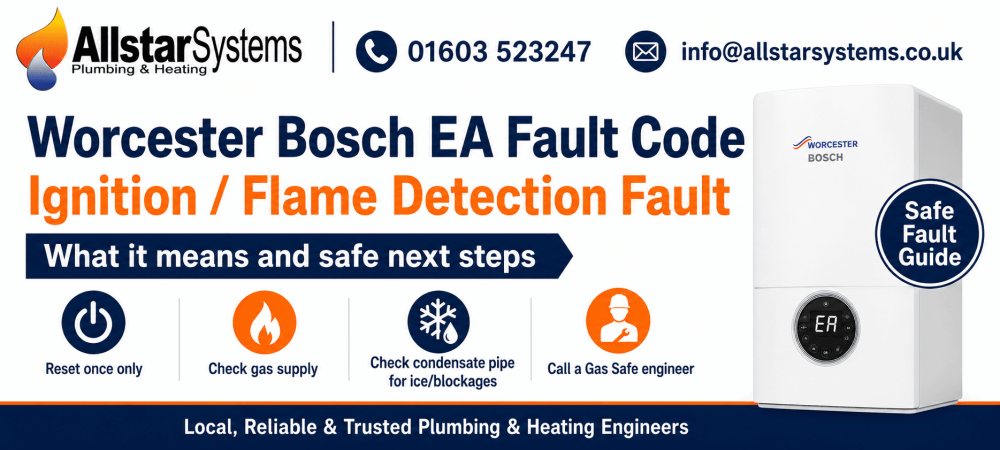
A Worcester Bosch EA fault code means the unit has failed to detect a flame. In simple terms, it has tried to start, but it cannot confirm safe ignition.
When this happens, the appliance stops and locks out. This protects the heating system and the property.
The cause may be simple. However, you should still treat the warning with care. Common reasons include poor fuel supply, a frozen condensate pipe, a blocked flue, or an ignition issue.
This guide explains what EA means, what you can review safely, and when you need a Gas Safe registered engineer.
What Does EA Mean on a Worcester Bosch Appliance?
EA usually means flame not detected. The unit has not proved ignition, so it shuts down instead of running unsafely.
As a result, you may lose heating, hot water, or both. Sometimes, the fault clears after one reset. However, repeat lockouts need proper diagnosis.
On many Worcester Bosch models, first steps may include reviewing the fuel supply, condensate route and flue outlet. Even so, you should never remove the casing or touch internal parts.
Common Causes of an EA Warning
Poor fuel supply
The appliance needs a steady supply to start correctly. If fuel cannot reach the burner, ignition may fail.
First, see whether other fuel-burning appliances in the property work. If they do not, the issue may sit outside the unit.
Frozen or blocked condensate pipe
A frozen condensate pipe often causes winter lockouts. This plastic pipe carries waste water away from the appliance.
When it freezes, you may hear gurgling. The unit may then stop firing and show the EA warning. This often affects exposed pipework during very cold weather.
Blocked flue outlet
The flue removes combustion gases safely. If the terminal becomes blocked, damaged, or restricted, the appliance may refuse to run.
Only look at the flue from ground level. Do not climb or try to clear it yourself.
Ignition or flame detection problem
If simple steps do not help, the issue may involve ignition parts, flame sensing, wiring, earthing, or the control board.
These tests need a qualified engineer. They involve internal components and combustion safety.
Safe Steps You Can Take First
You can make a few basic observations before booking a visit.
Review the supply
Make sure the supply is on. Also, try another fuel-burning appliance, if you have one.
If nothing works, follow supplier or emergency guidance.
Try one reset
Use the reset control for your model. If the heating starts and runs normally, keep an eye on it.
However, do not keep pressing reset. If EA returns, arrange a professional visit.
Look for frozen condensate pipework
During freezing weather, inspect any external plastic condensate pipe. If it sits at ground level and you can reach it safely, you may thaw it with warm water, a hot water bottle, or a heat pack.
Never use boiling water. Also, do not work at height.
View the flue safely
Look from a safe position only. If you see damage, ice, leaves, or another blockage, stop and book expert help.
What You Should Not Do
Do not remove the front cover.
Do not touch the fuel valve.
Do not alter internal settings.
Do not inspect wiring.
Do not climb to reach a flue or pipe.
Also, do not ignore repeated lockouts. A unit that keeps stopping needs safe fault finding.
When to Call a Gas Safe Engineer
Call a Gas Safe registered engineer if the EA warning keeps returning, the appliance will not restart, or it keeps trying to light.
You should also book help if the flue looks damaged, the condensate pipe freezes often, or the warning appears with noises, smells, leaks, or pressure changes.
If you smell gas, do not use electrical switches. Open doors and windows, leave the property, and call the National Gas Emergency Service on 0800 111 999.
How to Reduce Repeat EA Issues
Regular maintenance helps reduce avoidable faults. A yearly visit can review safety, pressure, flue condition, ignition performance and visible pipework.
Also, exposed condensate pipework may need better insulation or rerouting if it freezes often. A qualified engineer can advise on the safest long-term fix.
Need Help with a Worcester Bosch EA Fault?
If your heating has stopped, safe diagnosis matters. An engineer can find the cause, test the appliance and explain the next step clearly.
Book a fault diagnosis if the EA warning keeps returning or your heating and hot water have stopped
Worcester Bosch EA Fault Code FAQs
What does the Worcester Bosch EA fault code mean?
The Worcester Bosch EA fault code means the boiler has tried to ignite but cannot detect a flame. As a result, the boiler may lock out for safety. This fault often links to gas supply problems, ignition issues, flame sensor faults, or a blocked condensate pipe.
Why is my Worcester Bosch boiler showing an EA fault code?
Your Worcester Bosch boiler may show an EA fault code because it cannot light correctly. Common causes include no gas supply, low gas pressure, a frozen condensate pipe, a faulty ignition electrode, a dirty flame sensor, a blocked flue, or a gas valve fault.
Can I fix a Worcester Bosch EA fault code myself?
You can carry out simple checks first. For example, check that other gas appliances work, make sure your gas meter has credit, and see whether the condensate pipe has frozen in cold weather. However, you should not open the boiler casing or work on gas parts. Instead, call a Gas Safe registered engineer.
How do I reset a Worcester Bosch boiler with an EA fault?
You can usually reset a Worcester Bosch boiler by pressing and holding the reset button, although the exact method depends on the model. However, only reset the boiler once or twice. If the EA fault returns, stop using the boiler and arrange a professional boiler repair.
Is a Worcester Bosch EA fault dangerous?
An EA fault does not always mean there is immediate danger. However, it relates to ignition and flame detection, so you should treat it seriously. If you smell gas, turn off the gas supply, open windows, avoid electrical switches, leave the property, and call the National Gas Emergency Service.
Can low gas pressure cause a Worcester Bosch EA fault?
Yes, low gas pressure can cause a Worcester Bosch EA fault code. The boiler needs a steady gas supply to ignite safely. If the gas pressure drops too low, the boiler may fail to light and show the EA error code.
Can a frozen condensate pipe cause an EA fault?
Yes, a frozen or blocked condensate pipe can sometimes cause an EA fault on a Worcester Bosch boiler. This issue often happens during cold weather. The boiler may shut down because condensate cannot drain away correctly.
Why does my Worcester Bosch EA fault keep coming back?
A recurring Worcester Bosch EA fault usually means the underlying problem has not been fixed. The cause may include a weak ignition electrode, flame sensor fault, gas valve issue, blocked condensate trap, flue problem, or PCB fault. Therefore, repeated resets will not solve the fault safely.
Do I need a Gas Safe engineer for a Worcester Bosch EA fault?
Yes, you should call a Gas Safe registered engineer if the EA fault remains after basic checks. An engineer can test the gas supply, ignition electrodes, flame sensor, gas valve, flue, and boiler controls safely.
How much does it cost to repair a Worcester Bosch EA fault?
The cost depends on the cause of the fault. A simple condensate issue may cost less than a gas valve, ignition electrode, or PCB repair. Therefore, a proper diagnosis gives the most accurate repair cost.
Can a Worcester Bosch EA fault affect heating and hot water?
Yes, an EA fault can stop both central heating and hot water. Since the boiler cannot confirm a safe flame, it may lock out until the issue gets resolved.
How can I prevent Worcester Bosch EA fault codes?
Annual boiler servicing helps reduce the risk of EA fault codes. During a service, an engineer can check ignition parts, clean key components, test combustion, inspect the flue, and spot early signs of wear. In addition, insulating the condensate pipe can help during winter.