




What Is a One Pipe Heating System? Pros, Problems and Upgrade Advice
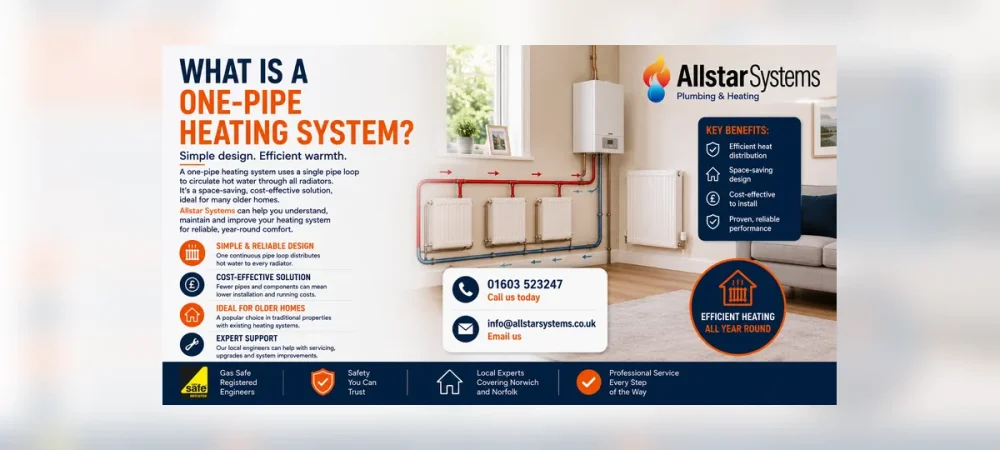
If your home has a one pipe heating system, this is carried out with one feed from the boiler connecting to each radiator then back. Essentially, this same feed distributes heat from an appliance to each radiator and returns back to boiler.
Because this design, each radiator may not reach same temperatures as others. Radiators the furthest away from an appliance tends to have less performance as closer ones.
What is a one pipe heating system
This uses one main circuit of water to travel from an appliance, through each radiator, and returns to the boiler. This old traditional method was carried out more so in commercial environments typically prior to modern two feed versions.
Due to each radiator being accessed through the same main circuit, water may cool as it passes through each radiator. For this reason, each radiator further in main circuit will usually have been larger size than those located near the boiler. Radiators further downstream of an appliance usually need increasing in size to obtain enough output.
How does a one pipe system work
Water from an appliance and travels through the main circuit, passing through each emitter. As water passes through each radiator heat is lost, but water continues on through to each emitter on this circuit. Difference between one and two pipe versions is that each emitter in a one pipe version do not have its own dedicated circuit.
What signs you may have a one pipe set up
If some emitters in your circuit heat some rooms better than others. In addition, if many radiators in the circuit do not reach high temperatures, especially those furthest from appliance, this is another sign that you have such setup.
This could be identified through exposed pipework within setup, look closely how radiators are piped this gives a good indication.
Common problems with a one pipe system
These setups are prone to circulation problems caused by sludge that may accumulate over time. If suffering from poor circulation, a power flush may be worth considering improving efficiency.
Could a modern boiler work on a one pipe system
Modern boilers could be installed and utilized as part of a one pipe setup. The efficiency and heating output will not be that great. This is because modern boilers have sensors within them, These take information of flow and return temperatures. When parameters are exceeded than this appliance will short cycle causing poor performance.
The existing setup needs carefully inspecting prior to a new boiler installation. A new boiler will solve many problems for the existing setup. If this setup is connected to a new appliance, performance and efficiency will still be not that great.
Should you upgrade your one pipe system
Whilst it may not be necessary to upgrade your existing setup if it currently performs well enough. There are a variety of scenarios in which it may make sense to upgrade. For instance, if the existing setup becomes increasingly uneven in its heat distribution across rooms, or plans for household renovation. Then it may make sense for an upgrade to a two pipe setup.
An incentive for a heating system upgrade would be better control of this whole circuit.
Causing from poor performance due to issues other than poor design, a boiler repair solution may provide relief.
When should you call a heating engineer
A heating company should be called if you’re experiencing any of these issues:
- Cold radiators
- loud noise
- Uneven heat
- Boiler cutting out
- Sluggish performance
- Leaky valves
- Rusted radiators
If you are planning a new boiler in your home, it is also important to speak with an engineer about your system to determine if any changes should be made prior to installation.
Improving a one pipe setup
Regardless of setup age, regular servicing is still important for ensuring boiler performance and longevity. Improving efficiency by power flushing the system. This will ensure circulation is good throughout, although you cannot clean a one pipe setup as effective compared to a two pipe.
Upgrading the existing heating pump on the setup would be a good option too. This will increase flow rates through the entire setup , improving performance and efficiency.
Need Help to understand an Older System
It is important to seek advice before attempting to replace parts at random.
Contact our team today who could inspect your heating system to determine if balancing, power flushing, radiator replacement, boiler replacement or upgrading your heating system may be the best solution to your heating problems.
FAQs About One-Pipe Heating Systems
What is a one-pipe heating system?
A one-pipe heating system uses one main pipe loop to carry water around the property, with radiators connected to the same circuit.
How is a one-pipe system different from a two-pipe system?
A one-pipe system uses one main loop, while a two-pipe system usually has separate flow and return pipes for the radiators.
Are one-pipe heating systems bad?
Not always. Some still work, especially in older homes. However, they can be harder to balance and may heat rooms unevenly.
Why are some radiators colder on a one-pipe system?
Radiators later in the loop may receive cooler water because earlier radiators have already taken heat from the circuit.
Can a one-pipe system be balanced?
Sometimes. Balancing may improve heat distribution, but it may not fully solve design limitations.
Can power flushing help a one-pipe system?
It may help if sludge or debris restricts circulation. However, older or fragile systems need assessment before flushing.
Can I add radiators to a one-pipe heating system?
Sometimes, but it can affect the rest of the system. An engineer should check the layout before adding radiators.
Can a modern boiler work with a one-pipe system?
Sometimes. However, the older pipework layout may limit heating performance or boiler efficiency.
Should I convert a one-pipe system to a two-pipe system?
Conversion may help if the system heats poorly, needs major work, or forms part of a renovation. However, it can involve disruption and cost.
When should I upgrade an old heating system?
You should consider an upgrade if radiators heat poorly, the system is hard to balance, pipework is old, or you are planning a new boiler or renovation.