



Commercial Gas Testing and Purging for Safe Business Sites
Commercial gas testing and purging must be planned around the installation, fuel, pressure, pipework volume and site conditions. For businesses, the work can affect safety, compliance, shutdown times and continuity. This guide explains when testing or purging may be required, what site planning should cover and why the correct procedure and a suitably qualified commercial gas engineer matter.
Why Gas Testing and Purging Matter
Commercial gas installations often serve important areas of a building. They may supply boilers, catering equipment, water heaters, plant rooms or specialist appliances.
If a fault develops, the risk can be serious. Gas leaks, fire, explosion and carbon monoxide all need careful prevention.
Testing helps confirm that pipework, valves, fittings and connected equipment are sound. Purging moves gas or air through pipework in a controlled way before a system starts, shuts down or returns to service.
Both tasks need qualified engineers, proper equipment and clear planning. Gas Safety Regulations and IGEM/UP/1-series framework. The correct standard depends on factors such as installation type, fuel, volume and operating pressure.
When Your Premises May Need a Visit
A business may need commercial gas testing or purging after several types of work.
Common examples include:
- new gas pipework
- pipework alterations
- commercial boiler replacement
- plant room upgrades
- suspected leaks
- system isolation
- decommissioning
- recommissioning
- planned maintenance
- LPG installation work
Early planning helps reduce disruption. It also gives landlords, facilities managers and business owners better control over access, timing and safety arrangements.
Natural Gas and LPG Need Different Care
Natural gas and LPG behave in different ways.
Natural gas mainly contains methane. It rises because it is lighter than air. LPG contains propane or butane. These fuels can collect at low level because they are heavier than air.
This difference matters during testing, purging and safety planning. LPG needs extra care around basements, pits, stores and poorly ventilated areas. Natural gas also needs strict control, especially in larger buildings with long pipe runs or busy plant rooms.
A competent engineer should plan around the fuel type, building layout, ventilation and connected appliances.
Commercial Sites Need Site-Specific Planning
No two business premises are exactly alike.
A small restaurant kitchen has different risks from a factory. A care home needs different planning from a warehouse. A school needs careful timing around pupils and staff.
Because of this, the safe method should reflect the building and its users. It should also consider access, ignition risks, occupancy, ventilation, emergency steps and handover requirements.
A generic approach does not give enough protection for complex or occupied sites.
How RAMS Support Safer Work
RAMS stands for risk assessments and method statements.
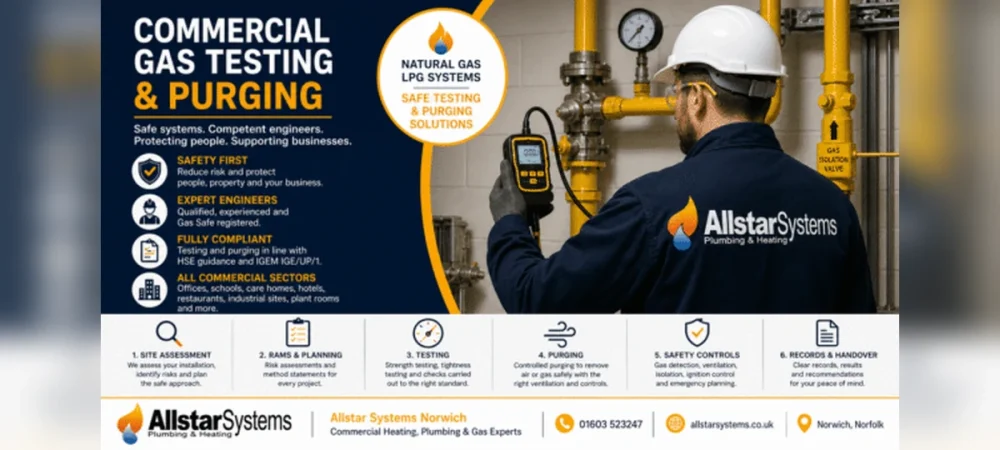
These documents help define the safe system of work before the task begins. A risk assessment identifies hazards. A method statement explains how the engineer will complete the task safely.
For commercial gas testing and purging, RAMS may cover:
- gas escape risks
- fire and explosion control
- carbon monoxide risks
- ventilation
- confined spaces
- isolation points
- public access
- hot surfaces
- electrical hazards
- emergency procedures
- clear communication with site staff
This planning helps the task run safely from arrival to handover.
What Engineers Check Before Work Starts
Before testing or purging begins, engineers need to understand the installation.
They may review pipework routes, valves, labels, controls, appliances, ventilation, earthing, access points and fuel type. They may also check how the building will be used during the visit.
The work area may then need warning notices, restricted access, isolation, permits or exclusion zones.
These steps help protect engineers, building users and the premises.
How the Process Is Controlled
The exact method depends on the installation. However, the process should stay controlled at every stage.
Testing follows the approved method for the pipework and connected equipment. Results should be recorded for the premises.
If purging is needed, the engineer must manage ventilation, monitoring, discharge points and ignition risks. They must also communicate clearly with the responsible person on site.
Once the task is complete, appliances may need recommissioning. The engineer should then provide a clear handover and explain any findings.
Where Extra Care Is Needed
Some premises need more detailed planning due to their use.
Care homes may have vulnerable residents. Schools need work planned around pupils and staff. Healthcare buildings may have critical spaces where disruption must be limited.
Hotels and restaurants may depend on gas for kitchens, heating and hot water. Industrial sites may have large installations, vehicle movement, hot works and permit systems.
In each case, the plan should protect people first while keeping essential services in mind.
Why Planned Gas Maintenance Helps
Planned commercial gas checks give businesses time to prepare. They can arrange access, inform staff, schedule quieter periods and manage any service disruption.
Routine commercial boiler servicing and checks also help identify defects before they become urgent. This supports safer operation, clearer maintenance records and better long-term planning.
For landlords, facilities managers and business owners, this can reduce stress and avoid last-minute decisions.
Commercial Gas Services from Allstar Systems
Allstar Systems supports commercial and industrial customers with gas testing, purging and related engineering work.
Our engineers can assess your installation, review risks, plan the method and complete the required task safely. We also support LPG systems, boiler plant rooms, temporary boiler hire, commercial heating, plumbing and wider mechanical services.
Each premises is reviewed on its own needs. This helps the work fit the fuel type, building layout, access, occupancy and operational demands.
Book Commercial Gas Testing or Purging
Commercial gas testing and purging need skill, planning and careful control.
Natural gas and LPG can create serious hazards when handled incorrectly. Therefore, businesses should choose qualified engineers with suitable commercial experience.
Contact Allstar Systems to discuss commercial gas testing, gas purging or planned gas maintenance for your premises.
FAQS
Who can carry out commercial gas testing and purging?
Commercial gas testing and purging should only be carried out by competent engineers with the right commercial gas training, experience, and registration for the work involved.
When is commercial gas purging needed?
Gas purging may be needed after new pipework installation, alterations, repairs, isolation, decommissioning, or recommissioning. The correct method depends on the system and site.
Is LPG purging different from natural gas purging?
Yes. LPG is heavier than air, so it can collect at low level. Therefore, LPG systems need careful planning around ventilation, low areas, drains, pits, and ignition risks.
Do commercial gas testing and purging need RAMS?
RAMS are always required. The risk assessment must suit the work, while documentation depends on the task and site controls.
Why should businesses plan commercial gas testing in advance?
Planned testing can reduce downtime, support compliance, improve safety records, and help businesses avoid emergency disruption.
Can gas testing help reduce business downtime?
Yes. Planned commercial gas testing can identify issues before they become urgent. As a result, businesses can plan repairs, maintenance, or upgrades more effectively.